


How to Plan A Wedding Photography Timeline (Without Losing Your Mind)
Weddings, Resources
Filed under:

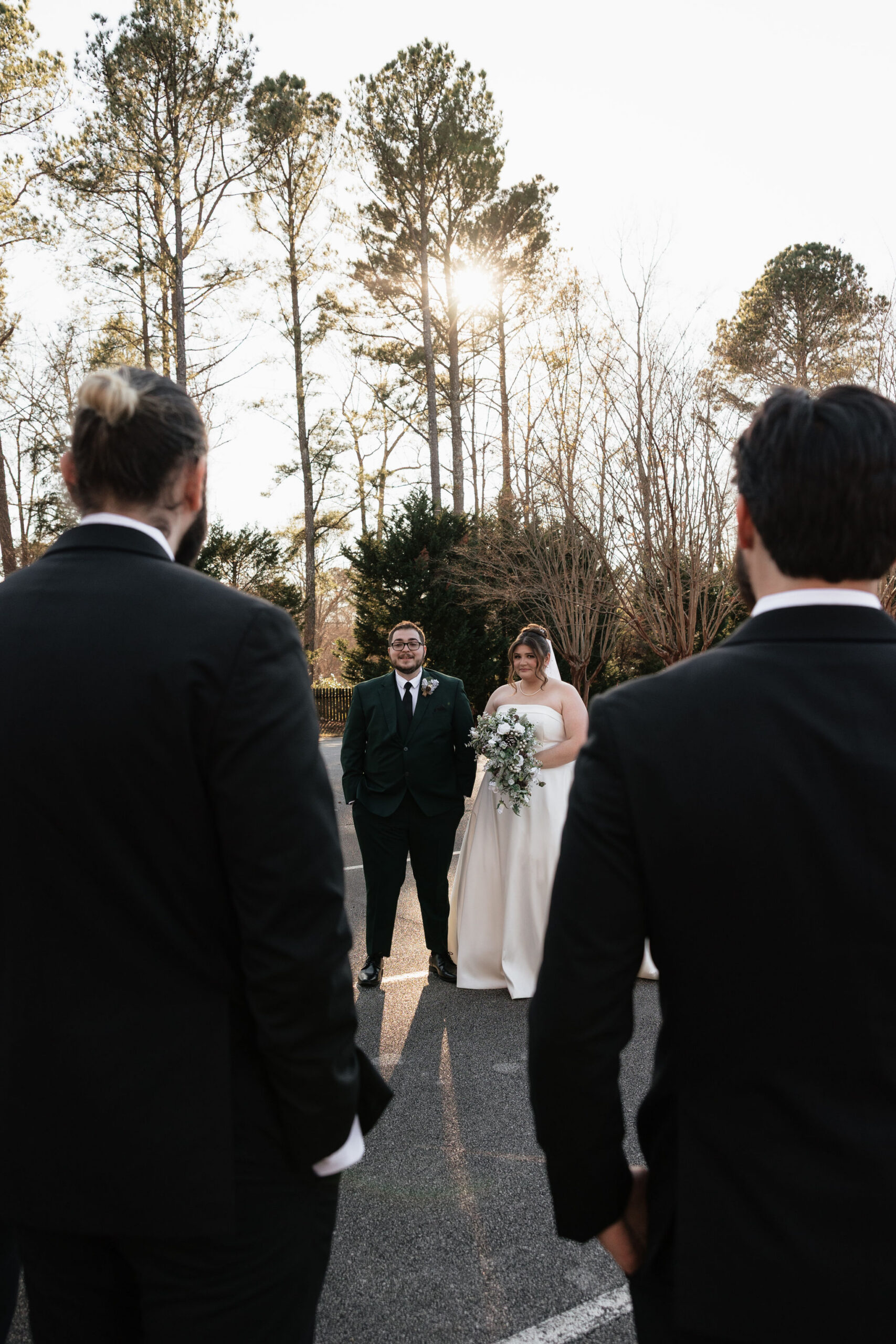


How to Plan A Wedding Photography Timeline (Without Losing Your Mind)
A great wedding photography timeline isn’t built around a rigid schedule — it’s built around your preferences, your priorities, and the reality of your day. The couples who end up the most relaxed with photos they love are the ones who thought through a few key decisions early and trusted their photographer to build around them.
Why One-Size-Fits-All Timelines Don’t Work
Every wedding blog on the internet will hand you a sample timeline and call it a day. Ceremony at 4PM, portraits at 5PM, golden hour at 6:30PM. Done. But if you’ve ever searched for how to build a wedding photography timeline and walked away more confused than when you started, it’s probably because most of what’s out there was written for a hypothetical couple — not you.
The problem with sample timelines is that they can’t account for the real variables: whether you’re someone who runs 20 minutes behind on a good day, how many family groupings are on your shot list (more on that later), or whether you’d rather spend your reception on the dance floor than disappearing for portraits. We build every timeline in direct consultation with our couples because we genuinely don’t believe there’s a universal right answer — only the right answer for you. The tips below are the exact things we walk through with every couple we work with.


The Decisions That Actually Shape Your Timeline
First look or no first look?
This is the single biggest structural choice you’ll make. A first look lets you complete most portraits before the ceremony, so you can actually enjoy cocktail hour and your reception without disappearing for an hour of photos. We lean toward recommending them — but that aisle moment is irreplaceable for some couples, and we respect that completely. Think about how present you want to be during your reception and how much time you would like to spend with your partner throughout the day. Let that guide you.


How much breathing room do you actually want?
Be honest with yourself. We build buffer time into every timeline automatically — because weddings run late and wardrobe malfunctions happen more often than you’d think. One thing we always tell couples: a block of time on your timeline doesn’t mean you’ll be actively shooting that entire time. A 45-minute portrait window won’t take 45 minutes — it gives you space to get water, freshen up, and just breathe.
And here’s the thing nobody talks about: timelines that breathe get more candids. When there’s room in the day, natural interactions unfold on their own — a quiet laugh between your partner and their dad, a spontaneous moment with your best friend. A jam-packed timeline doesn’t leave space for any of that.


Don’t underestimate getting ready.
This is where timelines fall apart most often. The variables that matter: how many people are getting ready with you, whether hair and makeup is on-site, and honestly — are you someone who needs a few quiet minutes before the chaos starts? Rather than giving you a blanket time recommendation, we’d rather ask: how calm do you want your morning to feel? Build in more time than you think you need. It’s always worth it.


Know your sunset time — we always do.
Sunset varies significantly by season and it directly affects your portrait light. Look up the sunset time on your wedding date before choosing a ceremony start time. Our general rule: start your ceremony 2-3 hours before sunset. If you’re not doing a first look, this becomes even more critical — you’ll need portrait time after the ceremony, and that window disappears fast if things run long.


Keep your family shot list tight.
We’ll always photograph the groupings you want — but our honest advice is to stick to immediate family only. Every grouping takes time: finding people, getting them in position, moving to the next group. We’ve seen couples get genuinely burnt out during family formals when the list runs too long, and that’s the last feeling you want right after your ceremony.


Know what kind of portraits you actually want.
Some couples want a lot of variety — different locations, golden hour, paparazzi flash photography. Others want to minimize time away from guests entirely. Neither is wrong. If candids are your priority, we’ll build in downtime so natural moments can unfold. If portrait variety matters, we’ll structure dedicated time for it. Tell us what you want your gallery to look like, and we’ll build around that.
It’s also worth asking yourself two honest questions: how much time do you actually plan to spend together on your wedding day, and how do you two naturally show up when you’re with each other? The couples who end up with the most candid, genuine galleries are the ones who are present and connected throughout the day — not just during portrait time. If you know you’re more low-key or tend to separate and work the room, that’s completely fine — we just want to plan around it so your gallery still feels authentically like you.


Protect a moment that’s just for you two.
We recommend this for every couple — with or without a camera present. What that looks like depends on your timeline.
If you’re doing a first look, that’s your moment — use it. Slow down, take a breath together, and if private vows feel right, this is a beautiful time for them.
If you’re waiting for the aisle, a private moment right after the ceremony may not be realistic — logistics like family formals and portrait time usually take over immediately. But that doesn’t mean it can’t happen. Once portraits are wrapped up, carve out even just a few minutes alone together before rejoining your guests. Another option we love: save your private vows for your couples portrait time. It makes for some of the most genuine, unguarded images of the entire day.


The One Thing That Covers Everything Else
Trust your photographer — and tell them your preferences so they can actually build around them. A good timeline is a flexible framework, not a rigid minute-by-minute schedule. The more your photographer knows about what matters to you, the better they can advocate for your vision when the day throws curveballs.
That’s exactly how we approach it with every couple we work with. No two timelines look the same, because no two couples are the same.


Frequently Asked Questions
How far in advance should we finalize our wedding photography timeline? We begin working on your timeline 60-90 days out, with a finalized version at least 2 weeks before your date.
Should our ceremony start time be based on sunset? Yes — especially if outdoor portraits matter to you. We look up the sunset for every wedding date and recommend starting the ceremony 2-3 hours prior. This timing is especially important if you choose not to have a first look with your partner so we have plenty of sunlight and buffer time for photos after your ceremony.
How long do family formals actually take? With a focused, immediate-family-only list, we typically schedule a minimum of 30 minutes. Extended family groupings can push that to 45-60 minutes or more.
What happens if the timeline runs behind on the day? This is exactly why buffer time exists. A well-built timeline has flexibility built in so a late start doesn’t derail everything. We’re always problem-solving in real time.
Do we really need golden hour portraits? You don’t have to — but even 10 minutes in that late afternoon light can produce some of the most stunning images of your day. It’s always a nice way to step away from your guests and breathe.

Samantha & Brady Creative is a husband-and-wife wedding photography team based in Columbia, South Carolina. We consult with every couple on their photography timeline because we believe your day should feel like yours — not a template. Ready to talk through what your timeline might look like? Click here to chat.
So let's tell it right.
your story is worth telling

stories
Featured


We're not here to make you fit a mold.
We're here to break it with you.
I'm Samantha, the dreamer behind the lens, the one asking "but how did that make you feel?" and probably overthinking your photo timeline (in the best way). I'm driven by the process: the storytelling, the editing, and that magical energy that happens when people feel safe enough to be themselves.
Brady's my other half in life and in business, the people person who makes friends with your entire wedding party and catches those in-between shots no one else saw. While I'm crafting the vision, he's reading the room and making sure everyone feels at ease.
A married Columbia, South Carolina photography duo
Meet Samantha & Brady


